Spousal Visa (Spouse of a Japanese National) — Application Support in Ishikawa & Toyama
Applying for a spousal visa often comes with more than just paperwork — it comes with the anxiety of “will they really believe this marriage is genuine?”
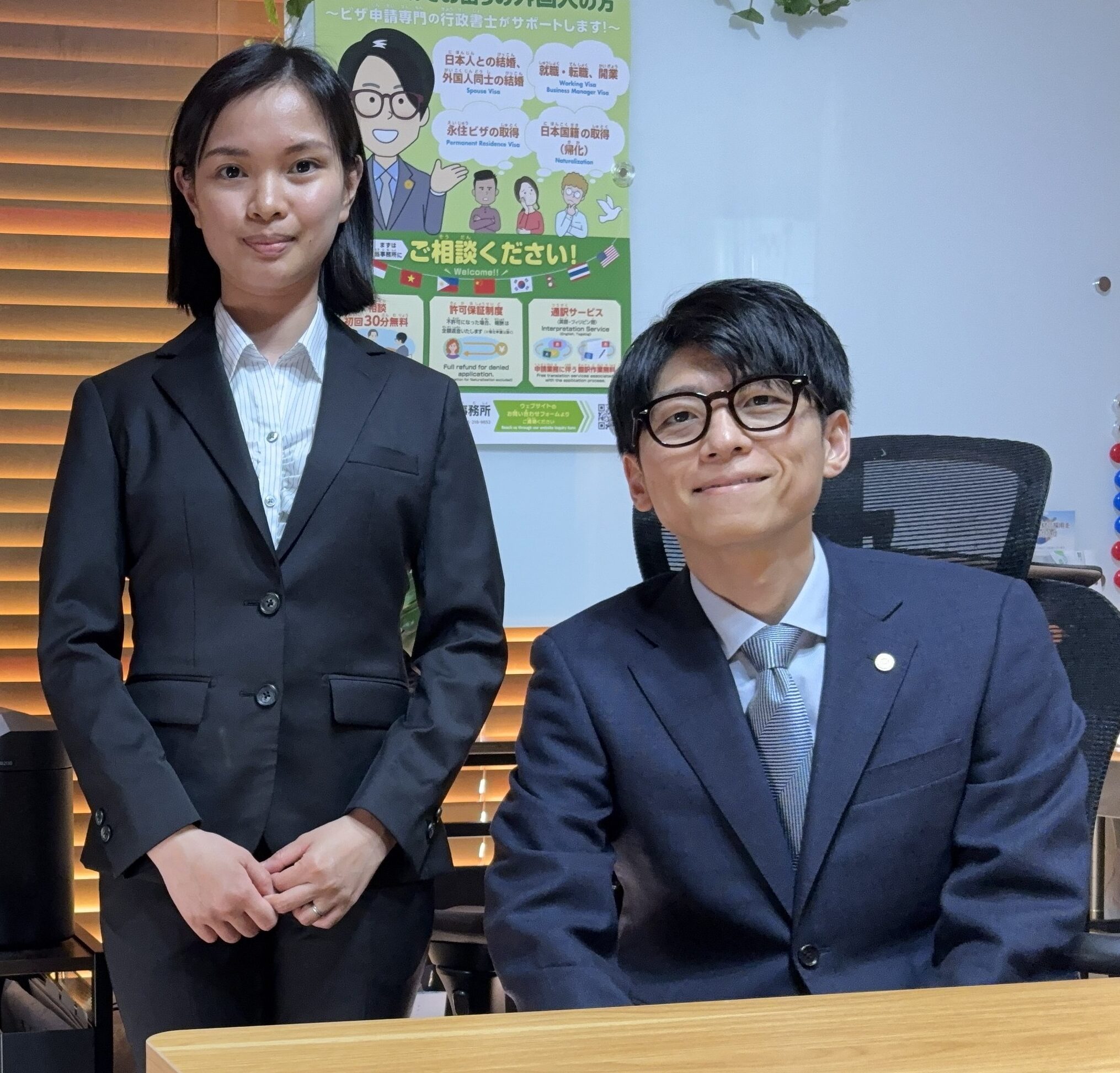
Our representative has experience supporting foreign nationals as a staff member of a technical intern training supervisory organization, and has personally gone through international marriage himself — to his wife from the Philippines — including changing his own status of residence from “Specified Skilled Worker” to “Spouse of a Japanese National.”
We support your application drawing on both institutional knowledge and firsthand personal experience.
- What is a Spousal Visa
- Requirements for Approval & Common Reasons for Denial
- Required Documents
- Case-by-Case Explanations
- Frequently Asked Questions
Who This Page Is For
For Foreign Nationals
For those aiming to obtain a spousal visa, we explain the requirements, documents, and screening process.
For Japanese Spouses
We explain how to support your partner’s residence status, including the procedures and preparation involved.

For Those Considering a Change of Status
For those considering switching to a spousal visa from Specified Skilled Worker, Engineer/Specialist in Humanities/International Services, or other work visas.
What is a Spousal Visa
A spousal visa (status of residence: “Spouse of a Japanese National”) is a status of residence for foreign nationals who are legally married to a Japanese national and wish to live in Japan. Its biggest feature is that there are no restrictions on the type of work you can do.
Unlike work visas such as Engineer/Specialist in Humanities/International Services, you can work in any occupation, including simple labor — as a full-time employee, part-time worker, through starting a business, or by changing jobs freely.
What’s examined in the screening process isn’t simply “whether the marriage registration has been accepted,” but whether the marriage has substance — in other words, whether you are actually living together as a married couple and have built an ongoing relationship.
Specifically, this substance is confirmed through whether you live together, the story of how your relationship led to marriage, the language(s) you use to communicate day to day, and records of your relationship (photos, call history, travel history, etc.).
Even if the paperwork looks complete, a vague explanation of the substance of your relationship can lead to denial — so it’s not just “what you submit” but “how you explain it” that matters.
Requirements for Approval & Common Reasons for Denial
In the spousal visa screening process, the following four factors are considered together. Lacking one alone doesn’t automatically mean denial, but when multiple concerns overlap, the review can take longer or the risk of denial increases.
- Substance of the Marriage
Whether you live together — and if not, whether you can explain a reasonable reason (such as working away from home or studying abroad). Whether the story of your relationship, from dating to marriage, is consistent. - Financial Stability of Both Spouses
Whether your household has sufficient income to sustain daily life. This isn’t judged solely on the Japanese spouse’s income — the foreign spouse’s income and assets are also taken into account. - The Applicant’s Conduct & Residence History
Whether there is any history of overstaying, illegal work, or immigration law violations. Even if there is, approval may still be possible depending on the circumstances, with a thorough explanation. - Factors That Can Raise Suspicion of a Sham Marriage
An extremely short dating period, a large age gap, no common language or unclear means of communication, or cases where the couple met through a matchmaking agency or dating app and married after a short relationship. These aren’t automatic denials — they’re cases that require a more careful explanation.
In most cases prone to denial, the cause isn’t the facts themselves but insufficient explanation. The more complex your circumstances, the more important it is to carefully organize and present the full story — this is the shortest path to approval.
Required Documents
- Application for Certificate of Eligibility (or Application for Permission to Change Status of Residence)
- Photo (4cm height × 3cm width)
- Family register (koseki tōhon) of the Japanese spouse (full transcript)
- Questionnaire (shitsumonsho)
- Snapshot photos (showing the story of your relationship)
- Certificate of residence (jūminhyō) for the entire household
- Certificate of tax payment / taxable income for the Japanese spouse (or other proof of income, as applicable)
- Marriage certificate (if married under a foreign system, issued by the partner’s home country)
- Letter of guarantee from the Japanese spouse
※Depending on your situation, additional documents may be required. We’ll walk you through the specifics once you request our services.
If You’re Still Feeling Uncertain
Start With a Free Consultation
Why Choose WILL Immigration Law Office
Handling a spousal visa application isn’t just about filling out paperwork on your behalf.
You need to accurately convey to the examiner — based on facts — why this marriage has real substance.
There are reasons rooted in our representative’s own background and experience for why we specialize in this field.
- Our representative has firsthand experience working with foreign nationals — from initial acceptance through daily life support to residence procedures — as a staff member of a technical intern training supervisory organization
- Our representative is himself part of an international marriage, and personally changed his status of residence from “Specified Skilled Worker” to “Spouse of a Japanese National” after marrying his wife from the Philippines
- In case of denial, we offer an Approval Guarantee (full refund policy)
Approval of your spousal visa isn’t the finish line — it’s the start.
As your married life continues, challenges will inevitably follow: your next residence renewal, eventually applying for permanent residency, procedures if you have children, and planning for your family’s future.
Rather than focusing only on getting the current application approved, our office believes in “hands-on, ongoing support” — walking alongside you with an eye on your future life plans.
We don’t want our relationship with you to end after a single request — we want to be someone you can turn to with confidence at every milestone in your life going forward.
“We support you with an eye not just on the application in front of you, but on your future plans as well.”
Case-by-Case Explanations
If you want to bring a partner living overseas to Japan, you first apply in Japan for a “Certificate of Eligibility.”
This certificate is issued when Japan’s Immigration Services Agency confirms in advance that “this person meets the requirements to obtain a visa.” The review typically takes around 1–3 months (this can vary depending on the season and individual circumstances).
Once the certificate is issued, you send it to your partner overseas, and your partner applies for a visa at the Japanese embassy or consulate in their country, after which they can come to Japan.
Common pitfalls in this case are:
① Insufficient evidence of the relationship (photos, call records, etc.), weakening the explanation of the marriage’s substance
② Submitting only the bare minimum documents even when your situation calls for additional ones
③ Missing the deadline to apply for the visa after the certificate is issued (the certificate has an expiration date)
If you’re currently in Japan under a status such as Technical Intern Training, Specified Skilled Worker, or Engineer/Specialist in Humanities/International Services, and you marry a Japanese national and want to switch to a spousal visa, you apply for a “Permission to Change Status of Residence.”
This case adds a practical issue on top of simply proving the substance of the marriage: smoothly transitioning from your current status. Technical Intern Training in particular does not, by its nature, generally allow a change to another status of residence without substantial justification.
In practice, for Technical Intern Training, this means sorting out your relationship with your supervisory organization and host company (the timing and process of resignation or contract termination); for Specified Skilled Worker, it means coordinating with your employer (including your registered support organization, if applicable).
If the timing of your application is off, you risk a gap period during the review of your status change where you’re unable to work — so the switch needs to be carefully scheduled.
Our representative has firsthand experience with these procedures as a staff member of a technical intern training supervisory organization, and has also personally gone through the change from Specified Skilled Worker to a spousal visa — so we can guide you on both the institutional requirements and the practical points to watch for.
Because a spousal visa is premised on an ongoing marriage, if the marriage ends through divorce or the death of your spouse, the basis for maintaining this status is generally lost.
However, depending on the circumstances, a change to another status such as “Long-Term Resident” may be approved, or you may be able to continue your residence under certain conditions. The factors considered include the length of the marriage, your foundation for life in Japan (employment status, whether you have children, and how they are being raised), and whether you can support yourself independently.
There are also cases where the marriage continues, but you’re not living together at the time of renewal due to working away from home or a temporary separation. In these cases, renewal is often approved by preparing a reasonable explanation for the separation, along with documentation showing that the marriage still has substance (such as records of regular contact).
Frequently Asked Questions
- Will I be approved even with a low annual income?
-
It’s not judged solely on the absolute amount of income — what’s assessed overall is whether your household income is sufficient to sustain daily life. Please check your specific situation with us in a free consultation.
- Is a short dating period a disadvantage?
-
What matters isn’t just the length of the dating period, but whether you can explain the story from dating to marriage. Even with a short period, this can be addressed by carefully organizing that story.
- How long does it take from application to approval?
-
This varies by season and individual circumstances, but we provide a general estimate during a free consultation.
- What if I’ve been denied once before?
-
We review the reasons for denial and consider the possibility of reapplying. We also offer an Approval Guarantee policy.
- What are the fees, and what does the Approval Guarantee cover?
-
Details on our fees and Approval Guarantee policy are explained individually during a free consultation.
You can check our fee schedule via the link below.
For Questions About a Spousal Visa, Start With a Free Consultation
Book Your Free Initial Consultation
Using the web form above is the smoothest way to contact us or book a consultation.
※For urgent inquiries, you’re also welcome to call us at 076-218-9852.